
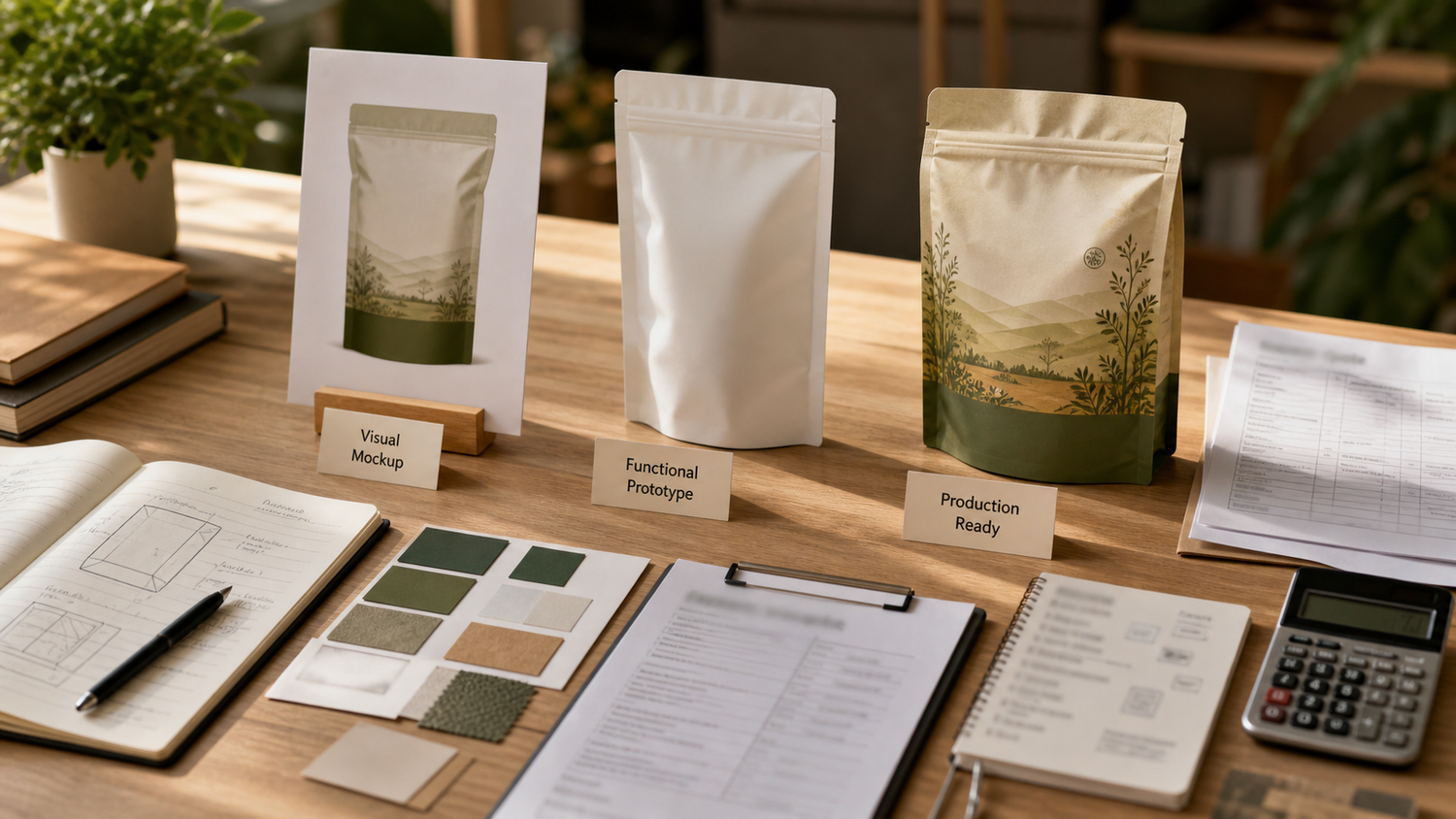
A strong product launch does not start with a perfect factory order. Most founders begin with a much rougher version of the truth: a product idea, a target customer, a few competitor references, a price range, and the feeling that there might be something worth building.
The hard part is turning that early idea into something a supplier, packaging partner, designer, investor, retail buyer, or manufacturer can actually evaluate. That is the difference between a product idea and a launch-ready sample.
At Anacotte, our Brand Launch Studio helps startups, creators, and growing brands move from early product concept to launch-ready planning. That can include product brief development, AI-assisted visuals, packaging direction, supplier-ready notes, low MOQ sourcing support, sample planning, and handoff to production partners.
If your project is already focused on custom flexible packaging production, the best next step is to request a packaging quote from Anacotte Packaging. If your product idea still needs structure, mockups, sample strategy, or launch planning, Anacotte can help shape the project before production.
Quick Answer: How Do You Turn a Product Idea Into a Launch-Ready Sample?
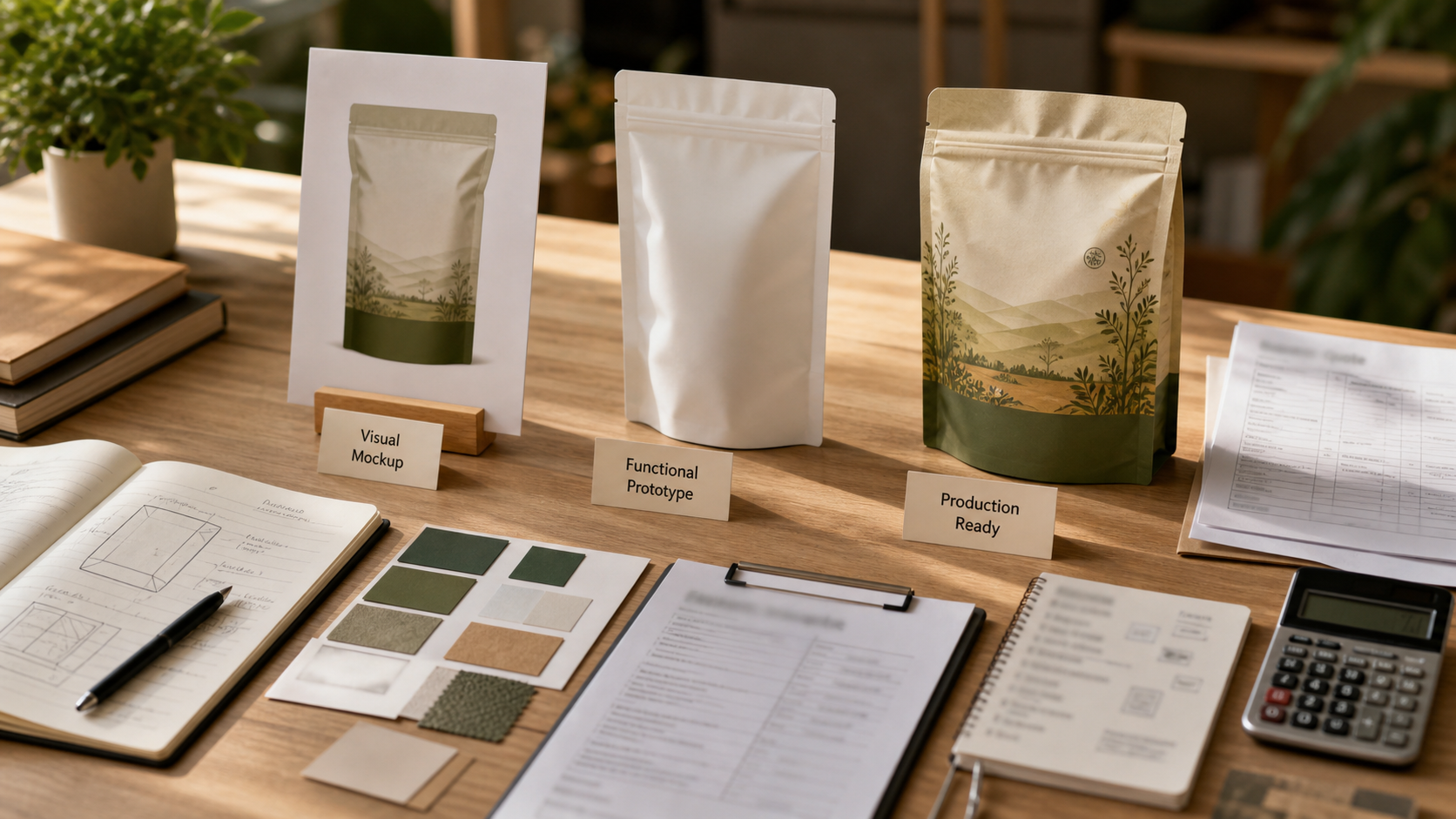
To turn a product idea into a launch-ready sample, start by writing a clear product brief, defining the target customer, choosing the sample goal, creating visual references, mapping packaging and material needs, collecting supplier feedback, and documenting the final handoff for production. A launch-ready sample does not have to be the final production version, but it should be clear enough for quoting, testing, buyer conversations, and next-step decision making.
In simple terms:
- A product idea explains what you want to create.
- A product brief explains what suppliers need to know.
- A sample plan explains what version you need first.
- A launch-ready handoff explains how the project can move into quoting, sampling, or production.
That bridge is where many early brands get stuck. They ask factories for prices too early, before the product, packaging, quantity, target cost, or sample goal is clear. The result is slow replies, vague quotes, inconsistent samples, and wasted time.
What Makes a Product Sample Launch-Ready?
A launch-ready sample is not just a nice-looking prototype. It is a working decision tool.
Depending on your stage, a launch-ready sample may be used for investor conversations, buyer meetings, Shopify product photography, retail testing, consumer feedback, influencer seeding, or production quoting. Each use case requires a different level of detail.
A good sample should help answer questions like:
- Who is this product for?
- What is the product format?
- What size, quantity, and packaging structure are needed?
- What should the product feel like in a customer's hand?
- What is the intended price point?
- What claims, ingredients, warnings, or usage details must appear?
- What needs to be tested before scaling?
- What information does a supplier need to quote the next step?
The more clearly a sample answers those questions, the easier it becomes to move from concept to real-world execution.
Product Idea vs Product Brief vs Supplier Quote Request
One common mistake is treating these three documents as the same thing. They are related, but they serve different purposes.
| Document | Purpose | What It Should Include |
|---|---|---|
| Product idea | Clarifies the opportunity | Customer problem, product category, reference products, brand direction |
| Product brief | Turns the idea into a working plan | Product type, size, material preferences, target user, price point, packaging needs |
| Sample request | Defines what version you need first | Sample goal, finish level, quantity, deadline, must-have features, test criteria |
| Supplier quote request | Helps suppliers price the next step | Specs, MOQ target, packaging, artwork status, delivery market, production assumptions |
If you skip the product brief and go straight to asking for a quote, suppliers often have to guess. Those guesses can affect material choice, sample quality, pricing, and timeline.
For early-stage brands, the best workflow is usually: idea first, brief second, visual direction third, sample request fourth, production quote fifth.
Step 1: Define the Customer and Use Case
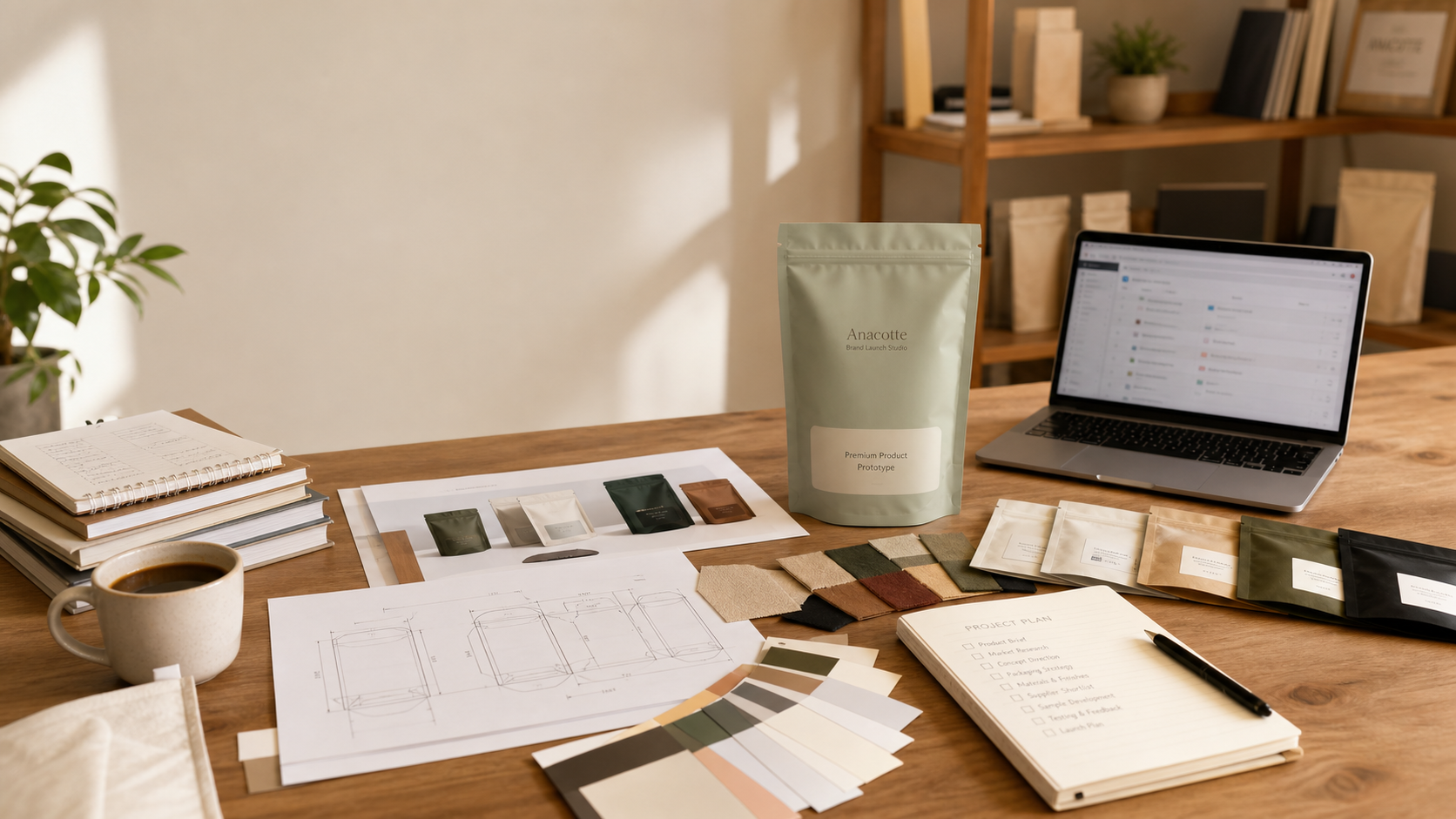
Before sourcing or sampling, define who the product is for and how they will use it. This sounds basic, but it drives nearly every later decision.
A skincare refill pouch for a premium hotel program has different packaging expectations than a refill pouch for a household cleaning subscription. A nutrition product for a gym customer has different messaging needs than a wellness product for a giftable retail display. A garden seed pouch for a local brand has different priorities than a multi-SKU national lawn and garden launch.
Write a short customer story before you write the factory request.
For example:
This product is for first-time founders launching a premium low MOQ CPG product online. They need a polished sample for product photography, packaging review, buyer conversations, and early customer testing before committing to a larger production run.
That paragraph already gives a supplier and design partner more context than a vague message like "I need a custom product sample."
Step 2: Build a Supplier-Ready Product Brief
A useful product brief does not need to be long. It needs to be specific enough to reduce guessing.
| Brief Element | What to Prepare | Why It Matters |
|---|---|---|
| Product type | Category, format, size, intended use | Helps suppliers understand the basic product direction |
| Target customer | Audience, price point, channel, use case | Guides positioning, materials, and finish level |
| Reference products | Competitor links, screenshots, moodboard | Creates a shared visual language |
| Packaging needs | Pouch, box, label, refill, sample pack, retail-ready format | Connects product development with real launch requirements |
| MOQ target | Expected test quantity or first production quantity | Prevents suppliers from quoting unrealistic volumes |
| Launch goal | Buyer sample, DTC test, investor demo, production pilot | Defines how polished the first sample must be |
If you are building your first product brief, Anacotte can help turn scattered notes, reference links, mockups, and product assumptions into a structured launch plan. That is often the step before reaching out to factories.
Step 3: Use AI Mockups to Clarify the Direction
AI visuals are not a replacement for engineering, compliance review, or print-ready artwork. But they are very useful at the early concept stage.
AI-assisted mockups can help founders compare product directions before paying for samples. They can show whether the product should feel premium, natural, clinical, playful, minimalist, durable, or retail-ready. They can also help align the founder, designer, packaging partner, and supplier before real production assets are created.
Use AI mockups for:
- Packaging style exploration
- Product photography direction
- Retail presentation concepts
- Color and material moodboards
- SKU family planning
- Investor or buyer presentation visuals
Do not use AI mockups as the final production file. Once the direction is approved, the project still needs real dimensions, dielines, material specs, barcode planning, regulatory text where relevant, and production-ready artwork.
If your brand sells through Shopify, it is also useful to think early about the product page, launch images, and customer education. Shopify's own guide to the product development process is a good reference for understanding how idea, validation, sourcing, and launch planning connect.
Step 4: Choose the Right Type of Sample
Not every sample has the same purpose. Ordering the wrong type of sample is one of the easiest ways to waste money.
| Sample Type | Best For | What It Should Prove |
|---|---|---|
| Visual sample | Pitch decks, buyer previews, design direction | Look, positioning, basic product story |
| Functional sample | Testing usability, fit, opening, filling, storage, handling | Whether the product works in real use |
| Packaging sample | Checking pouch, label, box, closure, finish, shelf presence | Whether the packaging supports the product and brand |
| Production sample | Approving final supplier setup before a larger run | Whether the factory can repeat the approved standard |
A founder preparing investor materials may need a visual sample first. A brand preparing retail buyer meetings may need a packaging sample with polished presentation. A brand preparing for production may need a functional or production sample.
Step 5: Answer Packaging Questions Before Sampling
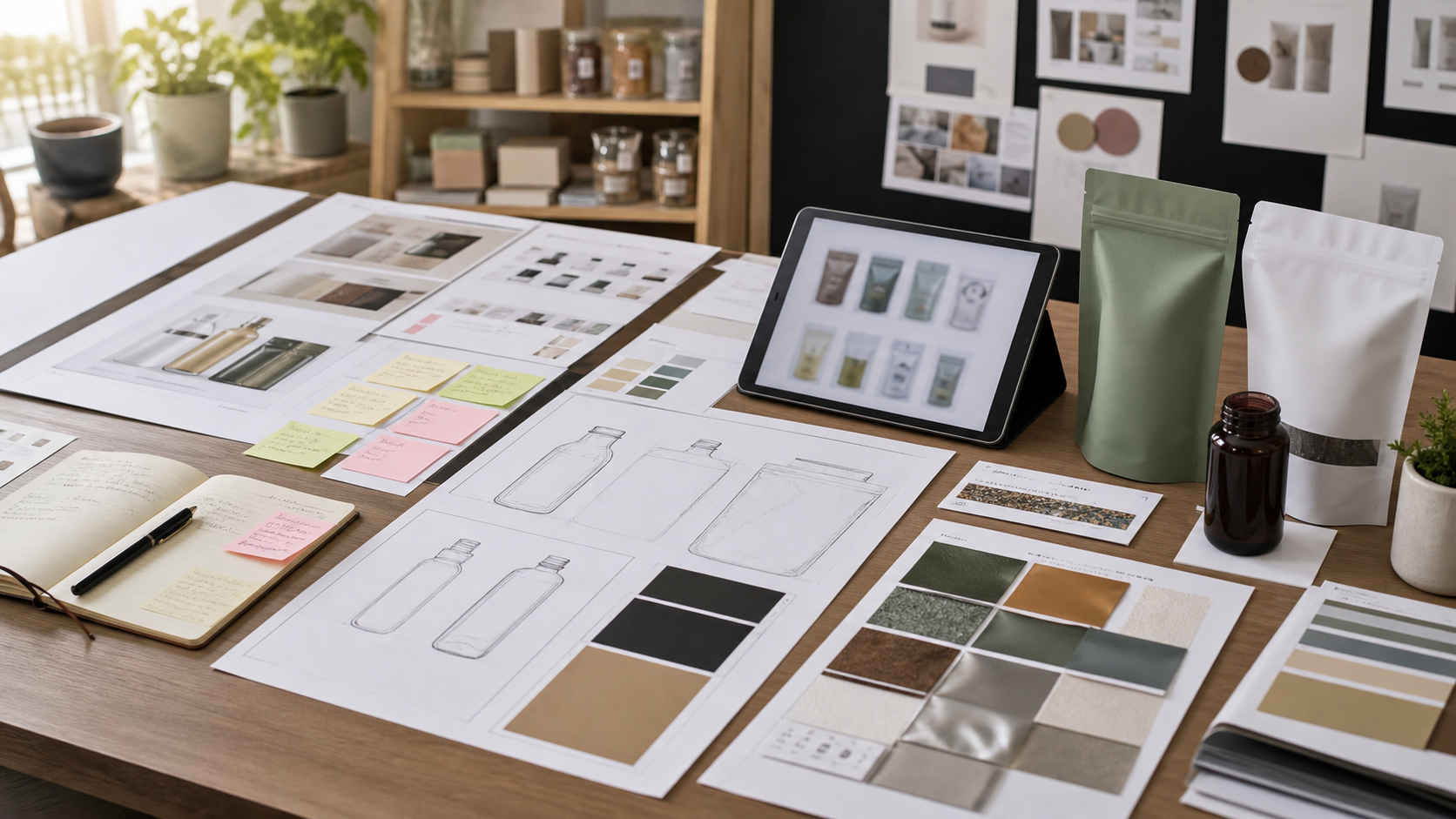
Packaging is often treated as a late-stage decision, but it affects sampling much earlier than many founders expect.
Before requesting samples, answer these packaging questions:
- Will the product be sold online, in retail, or both?
- Does it need a pouch, box, bottle, jar, label, sticker, insert, or refill pack?
- Does it need resealing, moisture control, barrier protection, child resistance, or tamper evidence?
- Will the product have multiple SKUs, flavors, sizes, scents, colors, or formulas?
- Does the packaging need to support product photography and buyer presentations?
- Is the artwork final, or does the brand still need concept development?
If the project is specifically custom flexible packaging, such as stand-up pouches, flat bottom pouches, spout pouches, refill packaging, or digitally printed low MOQ packaging, the production inquiry should go to Anacotte Packaging's quote page.
If the product idea itself is still being shaped, it may be better to start with Brand Launch Studio support through Anacotte's contact page.
Step 6: Plan Low MOQ Sourcing Realistically
Low MOQ can be very helpful for startup brands, but it does not remove the need for clarity. A lower minimum order quantity makes testing easier. It does not fix a vague brief, an unclear product spec, or an unfinished packaging direction.
Use low MOQ for:
- Testing early demand before scaling
- Launching multiple SKUs without over-ordering
- Preparing buyer or investor samples
- Running a first DTC launch
- Checking packaging and product-market fit
Do not expect low MOQ to solve:
- Unclear product requirements
- Missing artwork or label information
- Conflicting target price and material expectations
- Compliance questions that need professional review
- Unrealistic delivery timelines
For products that require barcodes for retail or marketplace readiness, founders should also understand the basics of UPC and GS1 identifiers. GS1 US has a useful official resource on UPCs, barcodes, and company prefixes.
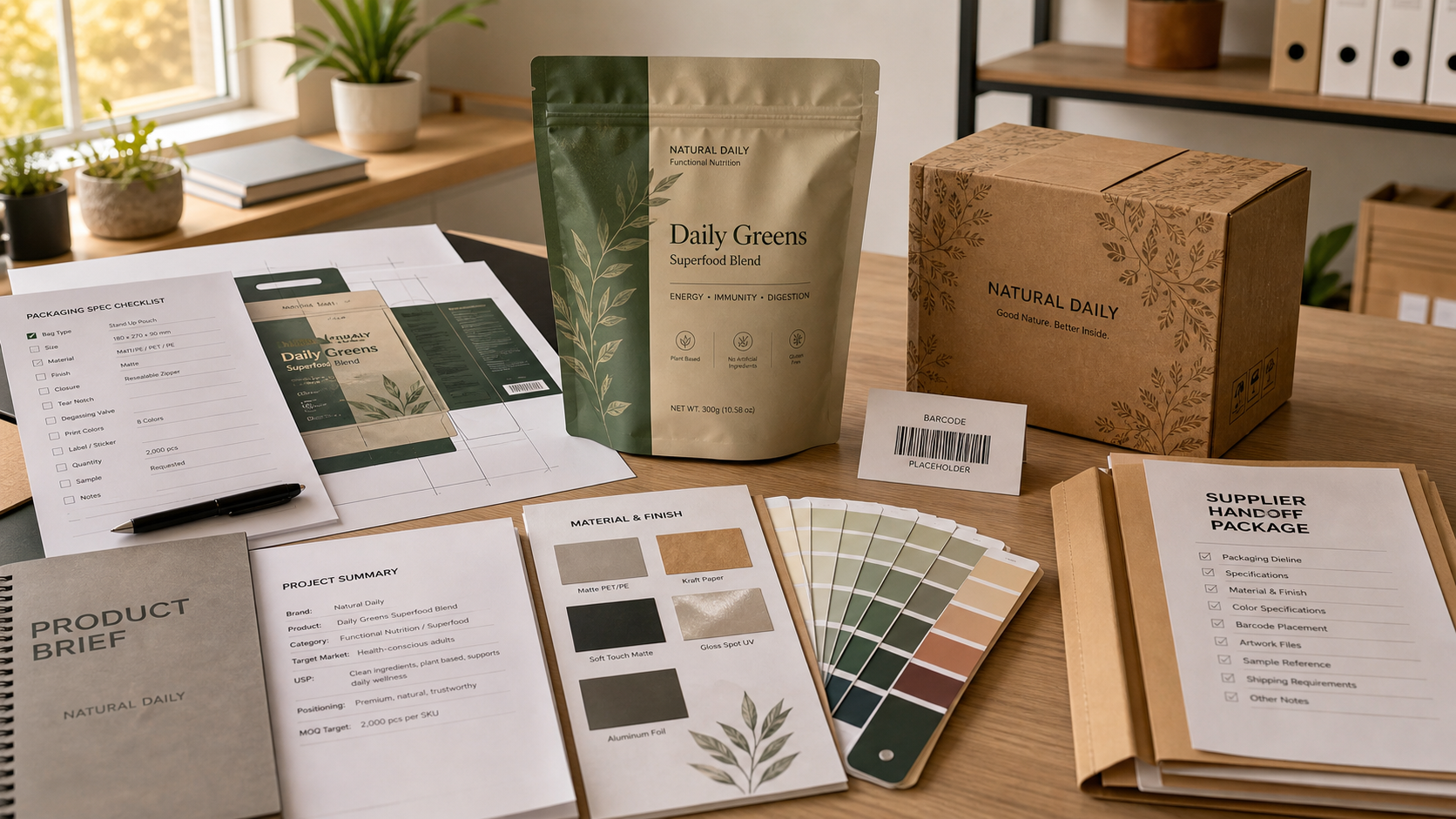
Step 7: Create a Supplier-Ready Handoff
The handoff is where many promising concepts lose momentum. A supplier-ready handoff should make it easy for a factory or production partner to understand what has been decided, what still needs review, and what must happen next.
A strong handoff should include:
- Product brief
- Sample goal
- Reference visuals
- Packaging structure
- Material preferences
- Target MOQ
- Target price range
- Artwork status
- Delivery market
- Known risks or open questions
This does not need to be perfect, but it needs to be organized. A clear handoff reduces back-and-forth, shortens quote time, and helps avoid mismatched expectations.
Anacotte vs Anacotte Packaging: Which Inquiry Path Should You Use?
Anacotte and Anacotte Packaging can support related projects, but they should not be positioned as the same service.
| Your Situation | Best Path | Where to Go |
|---|---|---|
| You have an early product idea but no clear brief | Brand Launch Studio | Contact Anacotte |
| You need AI mockups, sample planning, or launch visuals | Brand Launch Studio | Contact Anacotte |
| You need custom flexible packaging production | Anacotte Packaging | Request a packaging quote |
| You already have specs and print-ready artwork | Anacotte Packaging | Request a packaging quote |
| You need both product concept support and packaging production | Start with Anacotte, then route to Anacotte Packaging | Start the launch conversation |
This separation matters because it helps buyers find the right kind of help. A packaging-ready buyer needs speed and quoting clarity. A product-development buyer needs structure, creative direction, and sample planning before production.
Common Mistakes Startup Brands Make Before Sampling
Mistake 1: Asking for a Quote Before the Product Is Defined
If the product type, size, material, packaging, quantity, and goal are unclear, most quotes will be incomplete or inaccurate. A short brief can save weeks of back-and-forth.
Mistake 2: Treating the First Sample as the Final Product
The first sample is often a learning tool. It helps clarify what needs to change before production. Expect iteration.
Mistake 3: Ignoring Packaging Until the End
Packaging affects shelf presence, shipping, labeling, customer education, and perceived quality. It should be part of the product plan early.
Mistake 4: Ordering Too Much Too Early
Large first orders can create inventory risk. Low MOQ sampling or small-batch production can help founders test demand before scaling.
Mistake 5: Not Documenting Supplier Feedback
Every supplier conversation should improve the brief. If feedback is scattered across emails, chats, and screenshots, the project becomes harder to manage.
FAQ: Turning a Product Idea Into a Launch-Ready Sample
What should I prepare before asking for a product sample?
Prepare a product brief, target customer, reference products, desired sample goal, packaging needs, target quantity, target price range, and any material or compliance assumptions.
Do I need final packaging design before sampling?
Not always. For a visual or early functional sample, you may only need mockups and packaging direction. For production samples, you usually need accurate dimensions, dielines, artwork, label information, and material specs.
Can AI mockups replace real product samples?
No. AI mockups are useful for visual direction, buyer presentations, and early alignment. Real samples are still needed to test materials, sizing, usability, packaging, and supplier execution.
Can I start with low MOQ if my product idea is not final?
You can start planning with low MOQ, but the product idea still needs enough clarity for a supplier to quote or sample. Low MOQ helps reduce inventory risk, but it does not replace a clear brief.
When should I contact Anacotte instead of Anacotte Packaging?
Contact Anacotte when you need help shaping the product idea, building a launch brief, creating AI mockups, planning samples, or preparing a supplier-ready handoff. Contact Anacotte Packaging when you are ready for custom flexible packaging production.
Can Anacotte help with both product development and packaging?
Yes. Anacotte can help shape the early launch plan, and packaging-ready projects can be routed to Anacotte Packaging for custom packaging production, quoting, and low MOQ packaging execution.
Build the Sample Before You Build the Order
A launch-ready sample helps a founder make better decisions before committing to production. It turns vague ideas into visible, testable, supplier-ready plans. It gives designers, suppliers, buyers, and internal teams something concrete to discuss.
If you are still shaping the product idea, contact Anacotte to build a launch-ready brief, mockup direction, sample plan, and low MOQ sourcing roadmap.
If your product is already ready for custom packaging production, request a quote from Anacotte Packaging.
You can also message Anacotte directly on WhatsApp if you want to discuss which path fits your project.

Leave a comment
This site is protected by hCaptcha and the hCaptcha Privacy Policy and Terms of Service apply.