
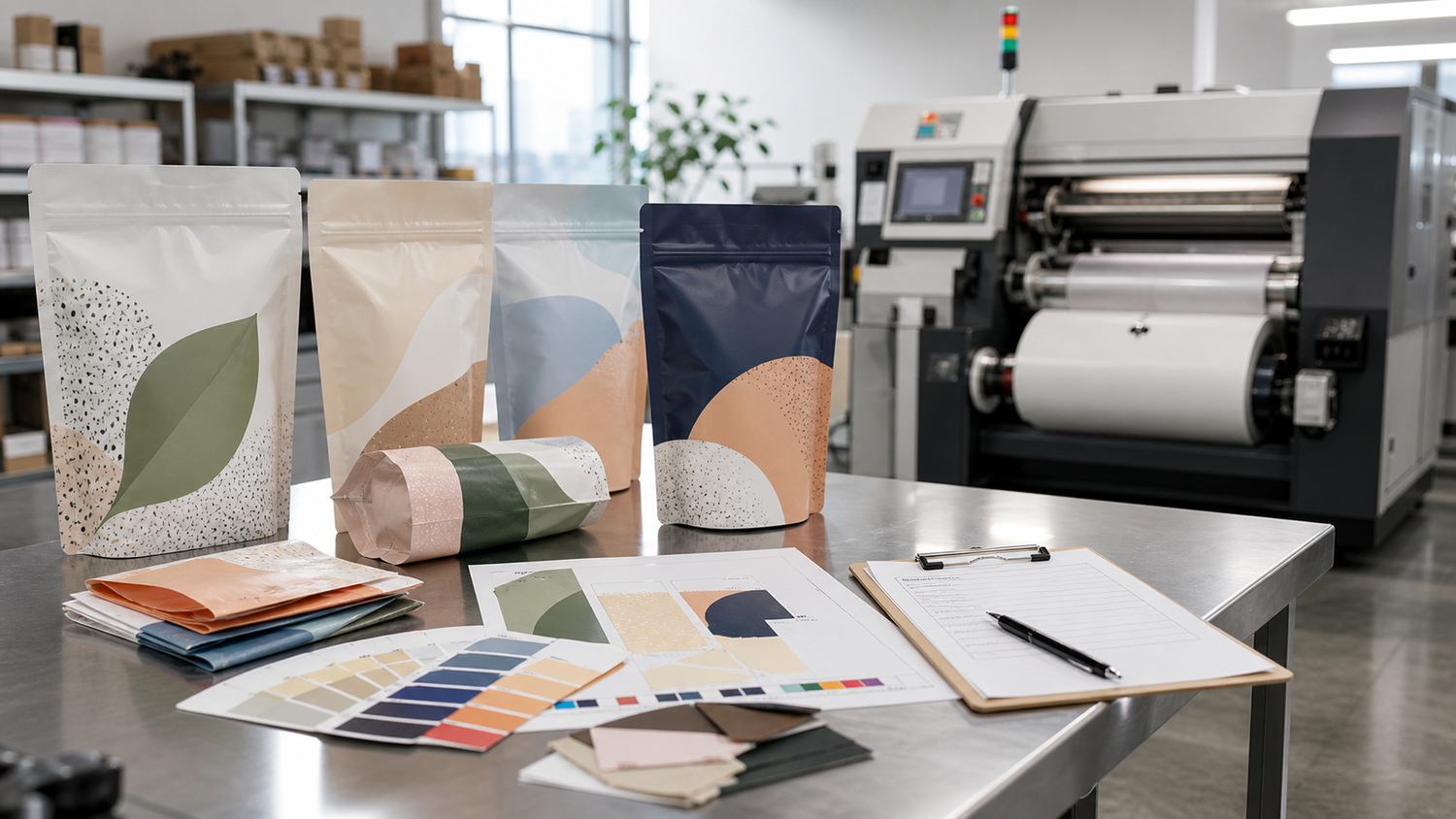

Short answer: low MOQ packaging lets new CPG brands launch with smaller custom packaging runs, validate product-market fit, and avoid tying up cash in thousands of unused pouches. For many early-stage food, beverage, beauty, pet care, supplement, and household brands, a practical launch plan starts with one hero SKU, a small custom pouch run, clear labeling, and a repeatable reorder path.
If you are preparing a new CPG launch, packaging is usually one of the first real manufacturing decisions you make. It affects shelf appeal, unit economics, shipping, compliance, sampling, photography, and how confidently buyers understand your product. But ordering too much too early can trap a young brand in the wrong design, wrong size, or wrong material.
This guide explains how low MOQ custom packaging works, when it makes sense, and how founders can use it to launch smarter instead of simply ordering more inventory.
What does low MOQ packaging mean for a CPG launch?
Low MOQ means a supplier can produce custom packaging in a smaller minimum order quantity than traditional mass production. Instead of committing to very large runs at the beginning, a brand can start with a lower quantity while still using custom artwork, product-specific dimensions, and professional packaging materials.
For new CPG brands, low MOQ packaging is useful when you need to test:
- a first retail-ready product run
- two or three flavor, scent, or formula variants
- a new pouch size before placing a larger order
- founder-led ecommerce sales before entering retail
- packaging copy, claims, and shelf appeal
At Anacotte, low MOQ projects are typically built around practical packaging formats such as stand up pouches, spout pouches, flat pouches, and flat bottom pouches.
Why low MOQ matters for new CPG brands
A traditional packaging order often assumes you already know your best-selling SKU, final dieline, exact material structure, and long-term sales velocity. Most new CPG brands do not have that certainty yet.
Low MOQ packaging helps founders protect cash and learn faster. The goal is not only to buy fewer bags. The goal is to reduce the cost of being wrong while you are still learning from customers, buyers, creators, and small retail tests.
1. It lowers inventory risk
Ordering thousands of pouches before you have market feedback can create dead stock. If the design, net weight, flavor name, compliance copy, or packaging size changes, that old inventory becomes expensive clutter. A lower first run gives you room to improve.
2. It supports multi-SKU testing
CPG launches often depend on variants: flavors, scents, blends, sizes, refill formats, or seasonal concepts. With low MOQ packaging, a brand can test multiple SKUs without forcing each variation into a large production commitment.
3. It gets your product into real hands faster
Mockups are useful, but real packaging changes how customers perceive the product. A small production run lets you create product photography, send samples to retailers, fulfill early ecommerce orders, and collect feedback from real use cases.
4. It makes AI-assisted packaging iteration more practical
AI tools can help generate packaging concepts, compare visual directions, and speed up early creative exploration. But the final launch still needs a production-ready file, clear material choices, and supplier handoff. Low MOQ bridges the gap between concept and physical market test.
A launch-ready low MOQ packaging workflow
For a new CPG launch, the best workflow is simple and sequential. Do not start by asking for the cheapest pouch. Start by clarifying what the first batch needs to prove.
Step 1: Define the launch job
Decide what this packaging run must accomplish. Is it for direct-to-consumer launch, buyer samples, a farmers market, a retail pilot, influencer seeding, or a trade show? The answer affects material, finish, closure, quantity, and how polished the first batch needs to be.
Step 2: Choose the pouch format
Match the format to the product and use case. Dry snacks, powders, coffee, supplements, refill liquids, pet treats, and beauty products all have different packaging needs. For example, a refill liquid may need a spout pouch, while premium dry goods may look stronger in a flat bottom pouch.
Step 3: Confirm basic specs
Before artwork is finalized, confirm size, volume, barrier needs, zipper or spout requirements, hang hole, finish, and whether the pouch needs a window. If you are selling food, supplements, cosmetics, or regulated products, review labeling rules early. In the United States, brands can start with resources such as the FDA food labeling guidance and the FDA cosmetics labeling guidance.
Step 4: Build production-ready artwork
Good packaging artwork is more than a nice front panel. It includes dieline alignment, bleed, safe zones, barcode space, nutrition or ingredient panels when needed, claims review, color expectations, and readable typography. If you are new to packaging, this is where design support saves time.
Step 5: Produce a small batch and learn
Use the first batch to gather evidence: conversion rate, reorder requests, retailer comments, customer objections, shipping performance, and product photography quality. Then revise before scaling to larger production.
Low MOQ packaging: best use cases
| Launch situation | Why low MOQ helps | Packaging decision to test |
|---|---|---|
| First CPG launch | Limits upfront inventory risk | Size, structure, print finish |
| Multiple flavors or scents | Allows SKU testing without overbuying | Color system, variant naming, shelf set |
| Retail buyer samples | Creates a professional physical presentation | Claims hierarchy, barcode, case pack logic |
| DTC product validation | Lets founders ship real customer orders | Unboxing, durability, shipping weight |
| Seasonal or limited run | Avoids long-term leftover packaging | Artwork direction, campaign messaging |
What to prepare before asking for a quote
You do not need to know every technical detail before speaking with a packaging partner. But the more clearly you explain your launch, the faster the quote and production path will become.
- product category and fill type
- target pouch size or fill weight
- estimated first-run quantity
- number of SKUs or design versions
- reference packaging you like
- sales channel: ecommerce, retail, samples, trade show, or wholesale
- any required claims, barcode, ingredients, warnings, or certifications
- desired timeline for samples and production
You can also review Shopify's overview of product packaging for ecommerce brands for broader context on packaging as part of the customer experience.
How Anacotte helps new CPG brands launch packaging
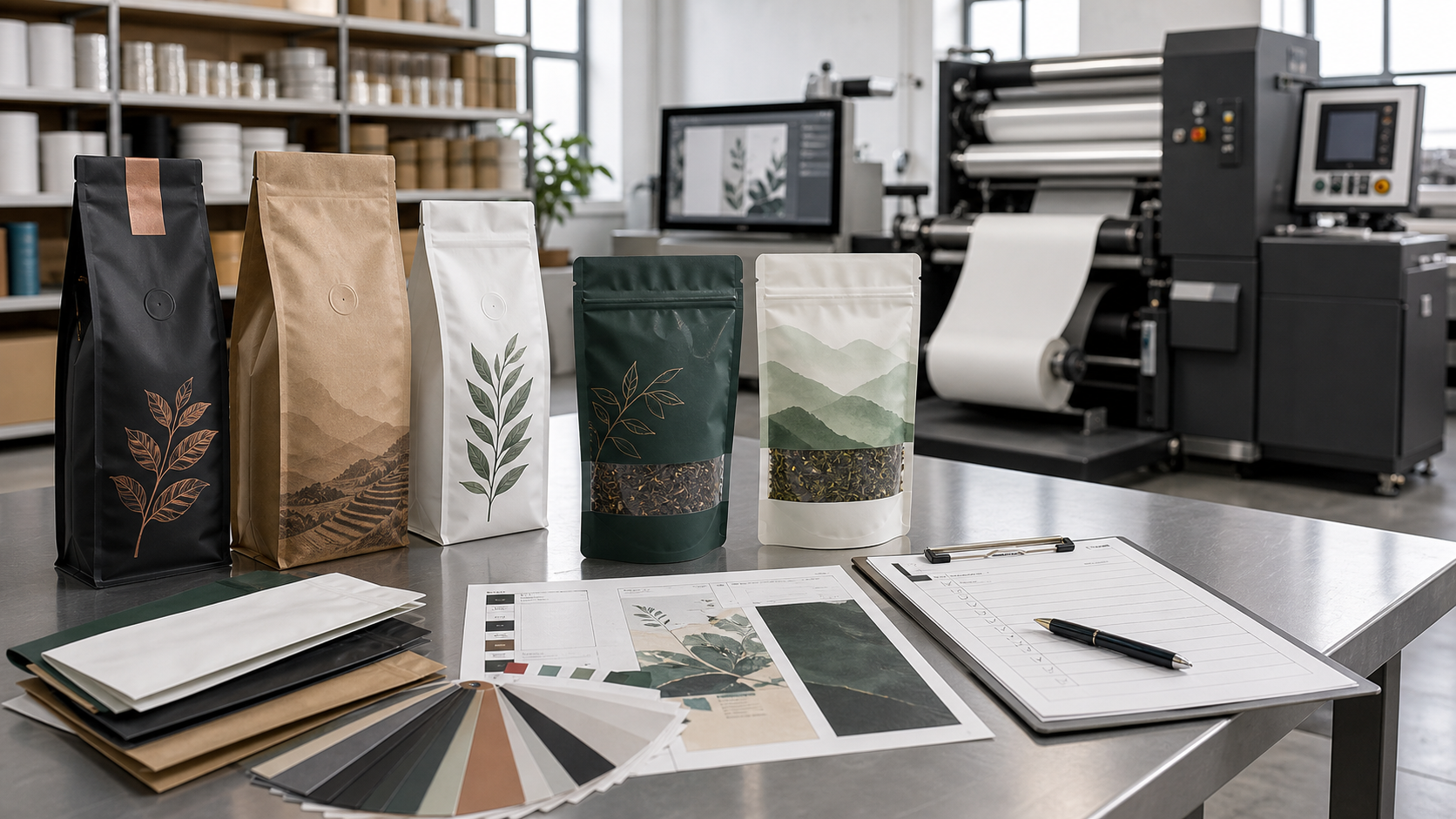
Anacotte supports small and growing brands that need custom flexible packaging without the confusion of traditional packaging sourcing. The work can include concept direction, pouch format selection, mockups, production-ready artwork preparation, supplier handoff, and low MOQ production planning.
For founders, the value is a more guided path: fewer unknowns, clearer specs, and a packaging run that fits the stage of the business.
Explore packaging options by category:
- Food packaging
- Beverage packaging
- Beauty and personal care packaging
- Pet care packaging
- Household packaging
FAQ: Low MOQ packaging for CPG startups
What is the best packaging format for a first CPG launch?
The best format depends on the product. Stand up pouches are flexible for many dry goods and powders. Spout pouches work for liquids and refills. Flat pouches work for samples and single-use packs. Flat bottom pouches work well when shelf presence is a priority.
Can low MOQ packaging still look professional?
Yes. A small production run can still use custom artwork, structured dielines, strong materials, and polished print quality. The key is preparing files correctly and choosing a production method that fits the quantity.
Is low MOQ packaging only for startups?
No. Established brands also use low MOQ packaging for limited editions, seasonal launches, retailer tests, influencer kits, and new SKU validation.
How many packaging units should a new CPG brand start with?
There is no universal number. Start with the quantity that supports your first sales channel and learning goal. Many founders begin with a small custom run, collect market feedback, and then increase volume once the design and SKU mix are proven.
What should I finalize before production?
Finalize pouch size, material needs, print artwork, barcode, product claims, required labeling information, and launch timeline. If the product is regulated, check the relevant labeling rules before printing.
Key takeaway
Low MOQ packaging is not just a smaller order. For a new CPG brand, it is a launch strategy. It lets you create real packaging, test real demand, and improve before committing to larger inventory. If you are preparing a new CPG product, start with the smallest batch that can produce meaningful market feedback, then scale with confidence.
Need help turning a product idea into factory-ready packaging? Contact Anacotte to discuss low MOQ custom pouches, packaging design, and production support for your next CPG launch.

Leave a comment
This site is protected by hCaptcha and the hCaptcha Privacy Policy and Terms of Service apply.