
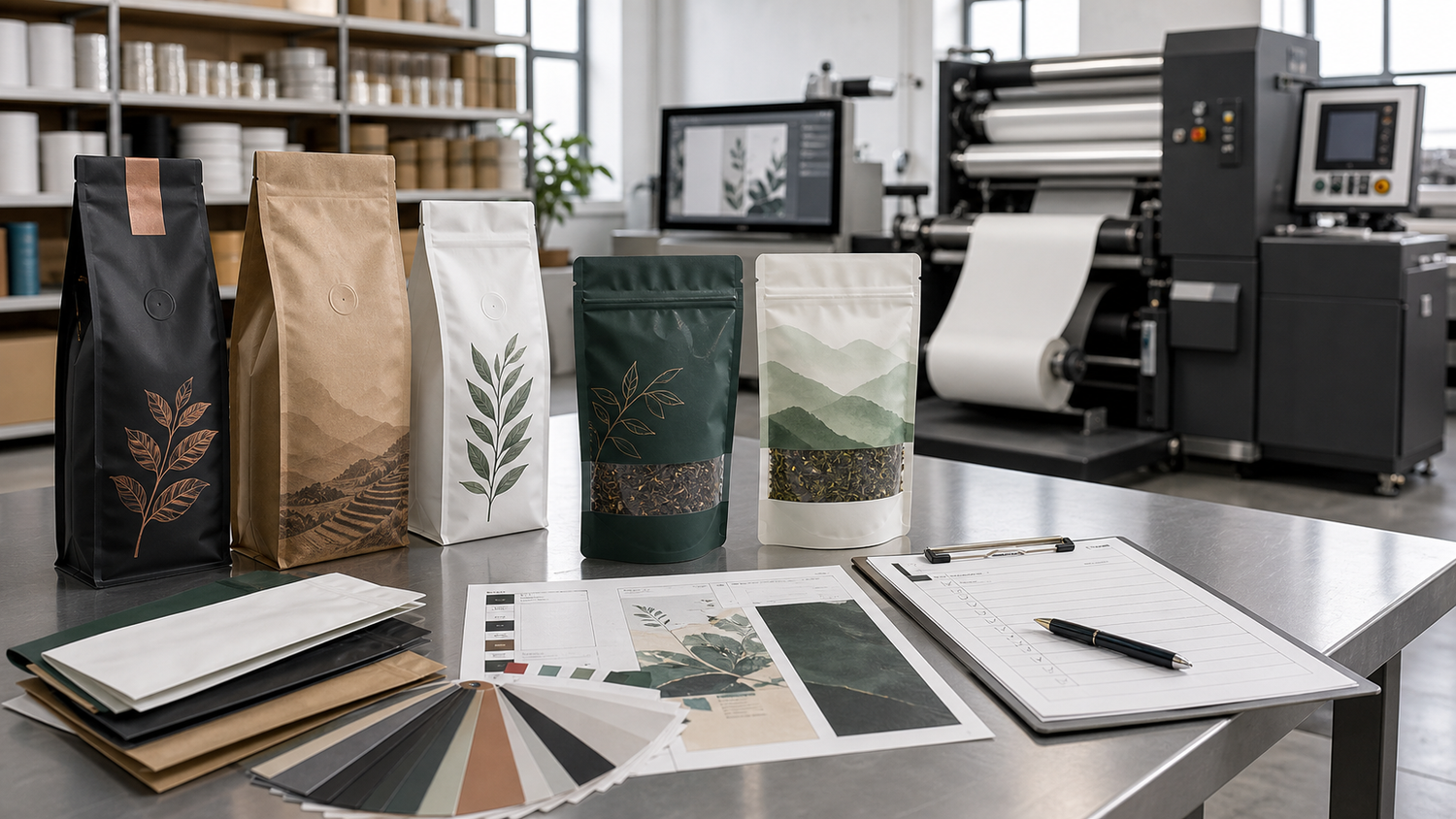

Short answer: coffee and tea packaging should protect aroma, freshness, and shelf appeal while giving a new brand enough flexibility to test roast profiles, tea blends, sizes, and seasonal SKUs. For most early-stage coffee and tea brands, the best starting point is a low MOQ custom pouch run with the right barrier structure, resealable closure, and production-ready artwork.
Coffee and tea are sensory products. Before a customer tastes the product, packaging has already communicated freshness, origin, quality, flavor direction, and brand positioning. A pouch that looks good but fails on barrier, valve, seal strength, or sizing can hurt the launch even when the product itself is strong.
This guide explains how to think about custom coffee packaging and tea packaging when you are preparing a new product launch, retail sample, subscription line, or limited seasonal release.
What makes coffee and tea packaging different?
Coffee and tea both need packaging that protects quality, but they do not always need the same structure. Coffee often requires aroma protection, oxygen control, and in many cases a degassing valve. Tea packaging is more focused on aroma retention, moisture protection, light protection, and a clean premium presentation.
Common packaging goals include:
- preserving aroma and flavor during storage
- protecting against oxygen, moisture, and light
- supporting retail shelf presence
- making the pouch easy to open, close, and store
- giving enough printable area for origin, roast, ingredients, instructions, and brand story
If you are still deciding on format, compare flat bottom pouches, stand up pouches, and flat pouches. Each format supports a different price point, shelf presence, and fill process.
Best pouch formats for coffee and tea
Flat bottom pouches for premium coffee and tea
Flat bottom pouches are often used when shelf impact matters. They stand strongly, offer multiple print panels, and create a more premium retail presence. For coffee, they work well for whole bean and ground coffee. For tea, they can support loose leaf tea, refill packs, and higher-end blends.
Stand up pouches for flexible launch runs
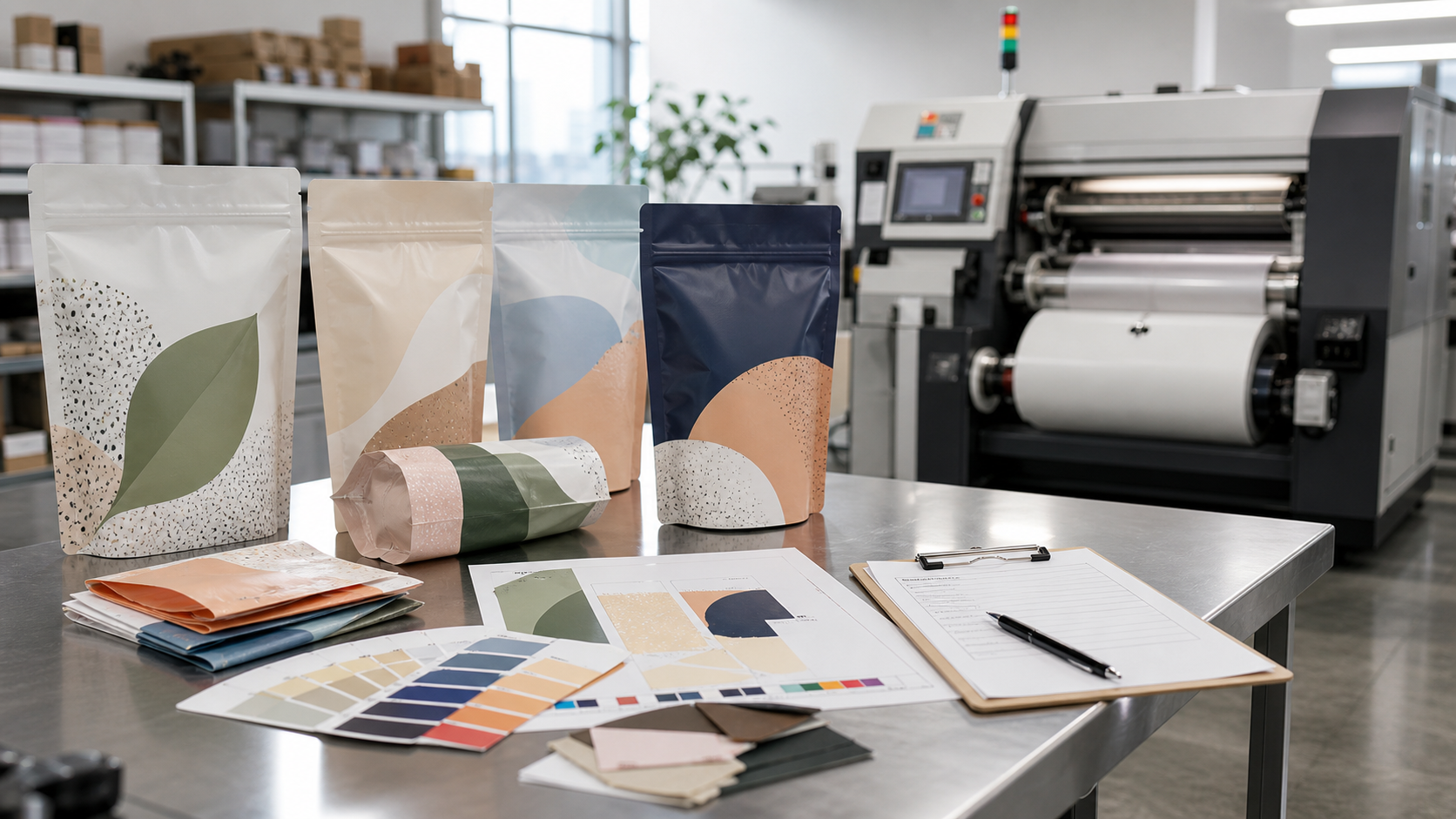
Stand up pouches are practical for startups because they balance cost, shelf visibility, and usability. They are a strong option for smaller coffee bags, tea blends, sample packs, and ecommerce-focused brands testing product-market fit.
Flat pouches for samples and single-serve products
Flat pouches can be useful for tasting kits, sample mailers, tea sachet outer packs, or promotional coffee samples. They are not always the main retail pack, but they can support discovery and customer acquisition.
Barrier materials: what should coffee and tea brands consider?
Barrier choice depends on product sensitivity, shelf life expectations, filling conditions, and sales channel. A high-barrier structure can help protect coffee aroma and tea fragrance, while the wrong material can allow quality loss before the product reaches the customer.
Key questions to answer before production:
- Is the product whole bean, ground coffee, loose tea, powder, sachet, or ready-to-brew blend?
- How long should the product stay fresh?
- Will it be sold online, in retail, or through subscriptions?
- Does the packaging need a degassing valve?
- Does the pouch need a zipper, tin tie, hang hole, window, or matte finish?
For U.S. packaged food labeling context, review the FDA food labeling and nutrition guidance. The packaging supplier can help with structure and print production, but the brand is responsible for accurate product claims and label information.
Low MOQ strategy for coffee and tea launches
Low MOQ packaging is especially useful for coffee and tea brands because product lines often expand quickly. A founder may want to test a house blend, single origin coffee, decaf, matcha, herbal tea, seasonal tea, or limited roast without ordering thousands of pouches for every SKU.
Use low MOQ packaging to test:
- different roast or blend names
- 250g, 340g, 12oz, 1lb, or sample sizes
- matte, kraft, metallic, or soft-touch finishes
- retail shelf response versus ecommerce conversion
- color systems across multiple SKUs
Packaging decisions by launch scenario
| Scenario | Recommended focus | Packaging note |
|---|---|---|
| New coffee roaster launch | Aroma barrier, valve, shelf presence | Flat bottom pouch with valve is often worth testing |
| Loose leaf tea brand | Moisture barrier, resealability, premium feel | Stand up or flat bottom pouch can both work |
| Subscription box | Shipping durability and SKU clarity | Keep labels and flavor systems easy to identify |
| Sampler kit | Small quantities and low unit weight | Flat pouches can support trial and discovery |
| Seasonal release | Fast artwork changes | Low MOQ helps avoid leftover seasonal inventory |
What to prepare before requesting a quote
To quote coffee or tea packaging accurately, prepare a short project brief:
- product type: whole bean, ground coffee, loose tea, sachets, powder, or blend
- target fill weight and pouch size
- number of SKUs or flavor variants
- need for degassing valve or zipper
- target sales channel: retail, ecommerce, subscription, wholesale, or sampling
- preferred finish: matte, gloss, kraft, metallic, soft touch, or window
- launch quantity and reorder expectation
How Anacotte supports coffee and tea packaging
Anacotte helps new and growing brands move from packaging concept to production-ready custom pouches. For coffee and tea, that can include format selection, pouch sizing, finish guidance, design mockups, production artwork preparation, and low MOQ production planning.
You can start by exploring flat bottom pouches for premium shelf presence, stand up pouches for flexible launch runs, or flat pouches for samples and trial packs.
FAQ: Coffee and tea packaging
Do coffee bags need a degassing valve?
Many roasted coffee products use a degassing valve because freshly roasted coffee can release gas after packing. Whether you need one depends on roast timing, fill process, product type, and shelf life requirements.
What pouch is best for loose leaf tea?
Loose leaf tea often works well in stand up pouches or flat bottom pouches with a good moisture and aroma barrier. A resealable zipper is usually helpful for repeat use.
Can low MOQ packaging support multiple blends?
Yes. Low MOQ custom packaging is useful when a coffee or tea brand wants to test several blends, origins, flavors, or seasonal designs before scaling volume.
Should coffee and tea brands use a window?
A window can help show product texture, but it may reduce barrier performance depending on structure. Use it only when the visual benefit supports the product and shelf life needs.
Key takeaway
Coffee and tea packaging is not only a container. It protects aroma, explains the product, and creates the first impression of quality. A low MOQ custom pouch run gives founders room to test formats, SKUs, and artwork before committing to larger production.
Need help preparing coffee or tea packaging? Contact Anacotte to discuss low MOQ custom pouches, artwork, and production support.

Leave a comment
This site is protected by hCaptcha and the hCaptcha Privacy Policy and Terms of Service apply.