
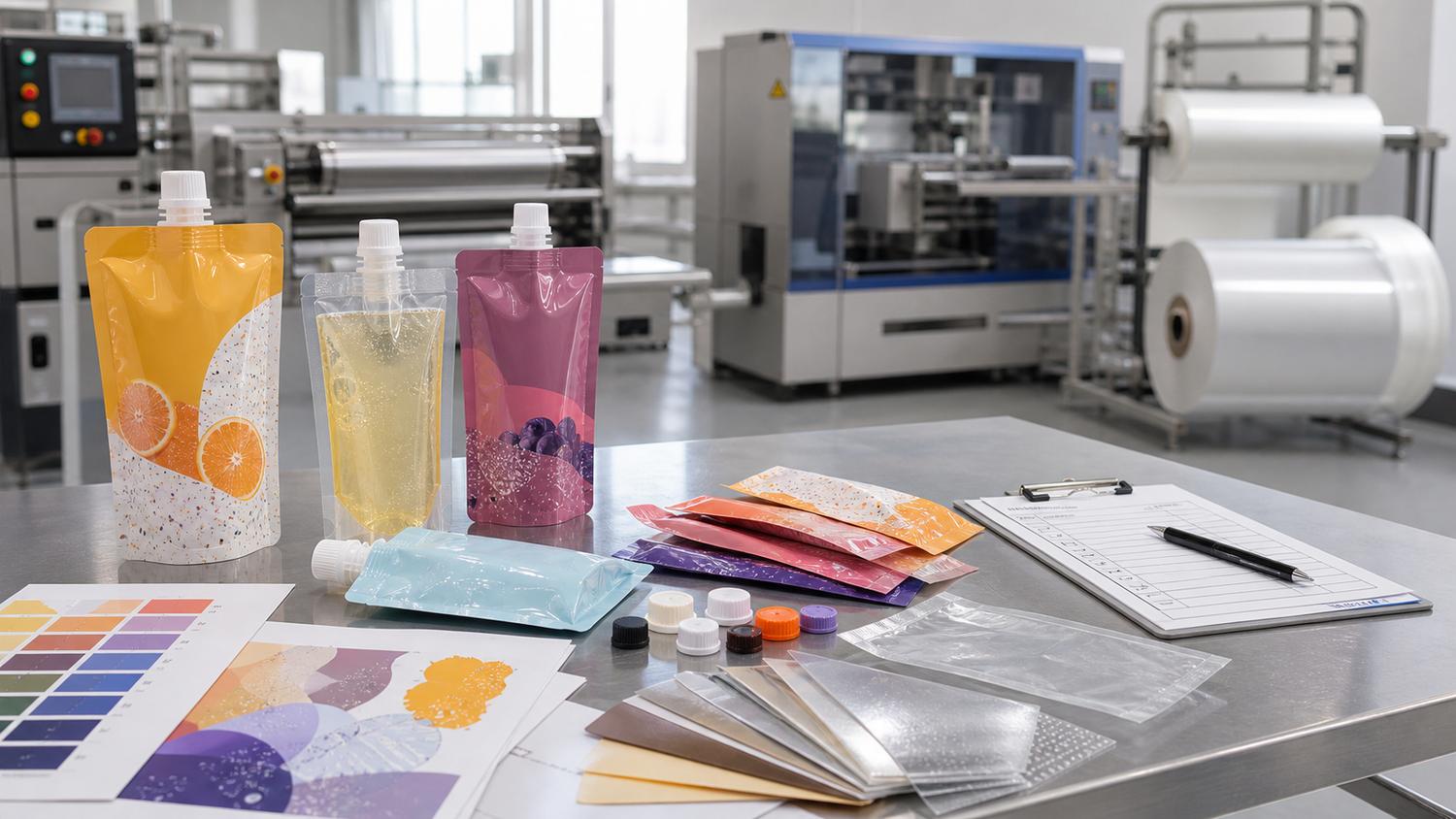

Short answer: beverage packaging needs to protect liquid products, support clean dispensing, communicate flavor and function quickly, and survive shipping or retail handling. For new beverage brands, low MOQ custom spout pouches and flexible drink packaging can make it easier to launch concentrates, refills, mixers, gels, purees, and functional beverages without overcommitting to large packaging inventory.
Beverage packaging is more complex than simply choosing a good-looking pouch. Liquids create pressure, weight, filling, sealing, leakage, barrier, and user-experience questions. A successful launch needs the right structure, cap or spout, fill volume, artwork, labeling, and production plan.
This guide is written for beverage startups and CPG teams preparing a new liquid product, retail sample, ecommerce launch, or pilot production run.
What makes beverage packaging different?
Beverage and liquid packaging must solve three problems at once: product protection, dispensing experience, and trust. Customers need to understand what the drink is, how to use it, how much is inside, and whether the package feels reliable.
Flexible beverage packaging may be useful for:
- juice or drink concentrates
- smoothie bases and purees
- cocktail mixers and syrups
- coffee concentrates and tea concentrates
- sports gels, functional drinks, and wellness shots
- refill pouches for liquid products
For liquid-focused projects, start by reviewing custom spout pouches and beverage-related options in beverage packaging.
Spout pouches vs. other beverage formats
Spout pouches are popular because they are lightweight, easy to store, and useful for products that need controlled pouring or repeat use. They can be a strong alternative to rigid bottles when a brand wants lower shipping weight, refill positioning, or a flexible format for a pilot launch.
When spout pouches make sense
- the product is pourable or squeezable
- the customer may use the product more than once
- shipping weight matters
- the brand wants refill or concentrate positioning
- the product needs a cap, fitment, or controlled dispensing point
When another format may be better
If the product is carbonated, high-pressure, hot-filled, highly acidic, or requires a specific processing environment, the packaging structure and production process need careful review. In some cases, rigid bottles, cans, cartons, or specialized retort packaging may be more appropriate.
Material and structure questions for beverage pouches
Before a beverage pouch can be produced, the product and process need to be understood. The same pouch structure will not fit every liquid. Product viscosity, acidity, filling temperature, shelf life, and shipping conditions all matter.
Ask these questions early:
- Is the product shelf stable, refrigerated, frozen, or filled fresh?
- Is it acidic, oily, concentrated, or sensitive to oxygen?
- Does it require a spout, cap, tamper feature, or tear notch?
- What is the target fill volume?
- Will it ship through ecommerce or sit in retail?
- Does the product need transparent, matte, metallic, or high-barrier film?
For U.S. beverage products, start with the FDA food labeling and nutrition resources. Juice brands should also review the FDA Juice HACCP information when relevant.
Low MOQ beverage packaging for launch testing
Low MOQ beverage packaging helps founders test demand before committing to large inventory. This is especially useful when a beverage product is still being refined, when multiple flavors are being tested, or when the first sales channel is ecommerce, farmers markets, trade shows, cafes, or retailer sampling.
Low MOQ can help you test:
- single-serve versus multi-serve pouch sizes
- spout position and cap usability
- front-panel flavor hierarchy
- matte versus glossy finish
- flavor color systems across SKUs
- retail buyer reaction to pouch versus bottle format
Beverage packaging launch matrix
| Product type | Packaging focus | What to test first |
|---|---|---|
| Drink concentrate | Barrier, spout, dosing clarity | Cap size, fill volume, instructions |
| Juice or puree pouch | Leak resistance and process fit | Film structure and filling method |
| Cocktail mixer | Shelf appeal and pour control | Premium finish and serving copy |
| Refill liquid | Durability and sustainability message | Spout position and shipping performance |
| Functional beverage sample | Small format and clear claims | Compliance copy and flavor hierarchy |
Design tips for beverage packaging
Beverage packaging has to be understood quickly. Customers should know the product type, flavor, use case, and benefit without studying the pouch. Strong design usually starts with a simple hierarchy.
- Put product type and flavor in obvious places
- Use color consistently across flavors
- Leave room for nutrition, ingredients, directions, and barcode
- Avoid overloading the front panel with too many claims
- Make instructions clear if the product is a concentrate or mixer
For broader ecommerce packaging context, Shopify's guide to product packaging is a useful overview.
What to prepare before requesting a quote
A beverage packaging quote depends on both the pouch and the liquid. Prepare these details before starting:
- product type and ingredients category
- target fill volume
- liquid viscosity and storage requirements
- preferred pouch size and spout/cap style
- number of flavors or SKUs
- sales channel and shipping method
- desired first-run quantity
- artwork, dieline, barcode, and required label information
How Anacotte helps beverage brands
Anacotte helps beverage and liquid product teams move from packaging concept to production planning. Support can include pouch format guidance, spout pouch mockups, artwork preparation, material discussion, low MOQ planning, and factory handoff.
Explore spout pouches for liquid formats, beverage packaging for category-specific options, and flat pouches for samples or single-use packs.
FAQ: Beverage packaging
Are spout pouches good for beverage startups?
They can be, especially for concentrates, refills, mixers, purees, and products that benefit from lightweight packaging. The product formula and filling process still need to match the pouch structure.
Can beverage pouches be used for multiple flavors?
Yes. Low MOQ custom packaging can help test several flavors or formulas without forcing a large order for each SKU.
What information should go on beverage packaging?
Most beverage packaging needs clear product identity, net quantity, ingredients, nutrition facts when required, manufacturer or distributor information, barcode, and any required warnings or directions. Confirm requirements for your product type and market.
Do all beverage pouches need high-barrier films?
No. Barrier needs depend on product sensitivity, shelf life, storage conditions, and processing. Oxygen, moisture, light, and flavor transfer should be reviewed before selecting materials.
Key takeaway
Beverage packaging should be selected around the product, not just the pouch style. Low MOQ custom packaging lets new beverage brands test format, flavor hierarchy, spout usability, and market response before scaling.
Need help planning beverage packaging? Contact Anacotte to discuss spout pouches, low MOQ packaging, and production-ready artwork for your next beverage launch.

Leave a comment
This site is protected by hCaptcha and the hCaptcha Privacy Policy and Terms of Service apply.